
From Static Battlecards to Living Competitive Intelligence: What’s New in Playwise HQ
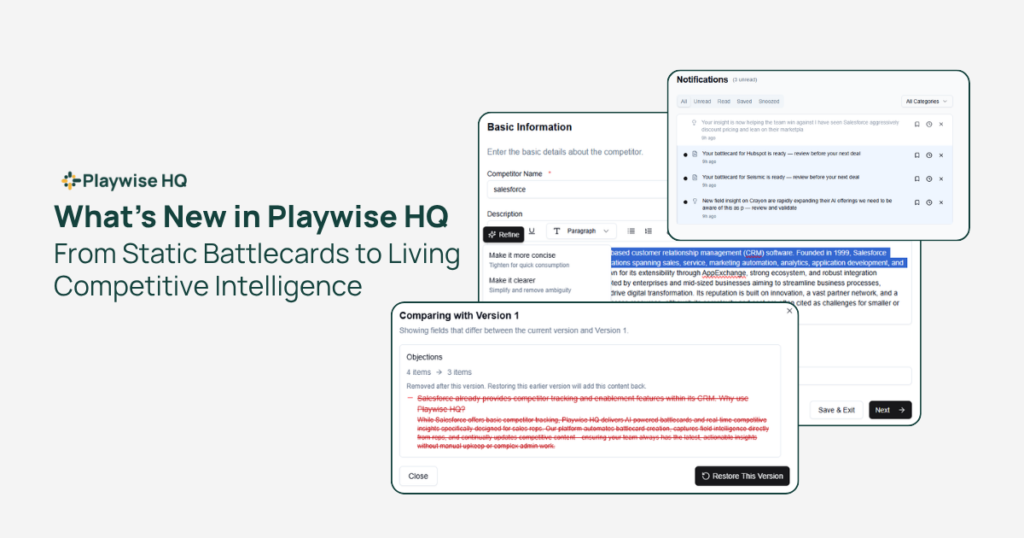
Playwise HQ has released new features designed to help sales teams move beyond static battlecards and build a living competitive intelligence system. With AI-assisted battlecard editing, field insight validation, version history, notifications, and deeper CRM integrations, teams can capture, improve, and act on competitive insights from every deal.
Price Objection Scripts for Competitive Deals: How to Standardize, Scale and Win More

Price objections in competitive deals are rarely about price — they’re a positioning failure dressed up as a budget conversation. The teams that consistently win at full price aren’t more charismatic; they’re running a standardized, competitor-specific script library that turns “you’re too expensive” into their most winnable objection.
Enterprise vs SMB Battlecards: How to Match Competitive Intel to the Way Each Team Sells
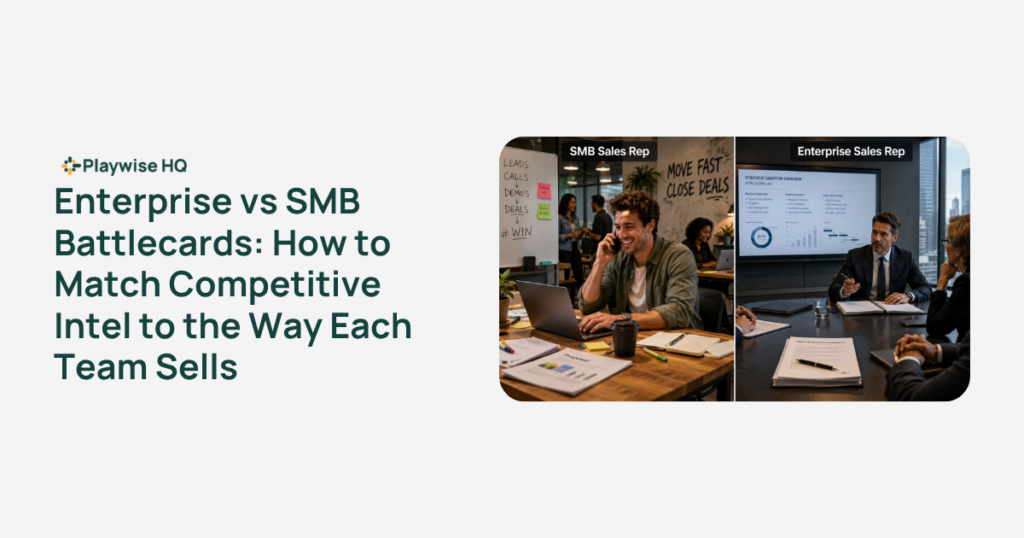
Enterprise and SMB sales teams lose deals when they’re forced to use the same generic battlecards for completely different sales motions. This guide explains how to design segment-specific battlecards that match deal complexity, rep workflow, update speed, and point-of-need delivery.
Win/Loss Interview Questions: The Complete Template for B2B Sales Teams
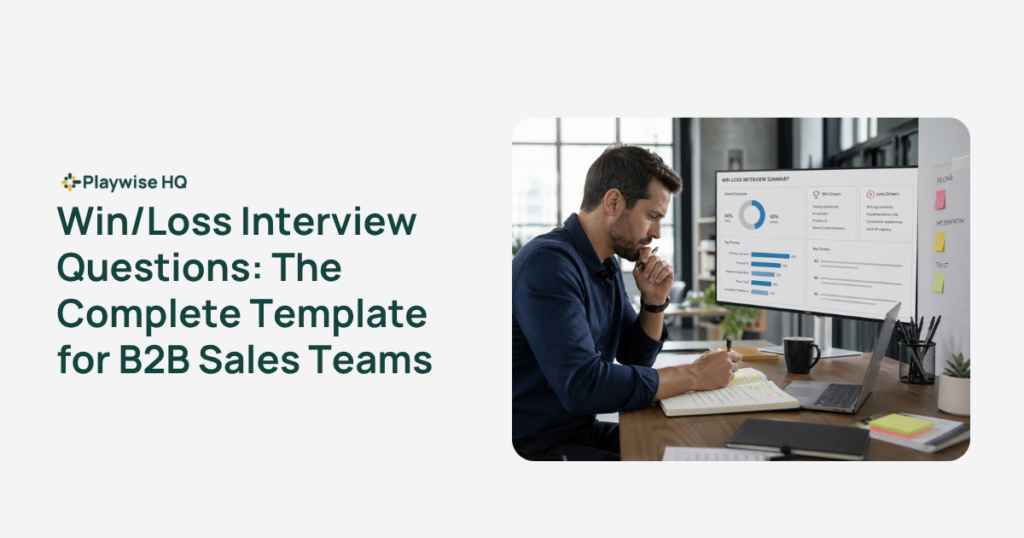
Win/loss interviews are the single most direct line between your revenue team and the truth about how buyers actually make decisions. Yet most B2B organizations either skip them entirely. Here’s a guide to get the most out of them.
Why You’re Losing to [Competitor Type] — And How to Flip the Pattern

Most sales teams don’t lose deals because of product gaps—they lose because they can’t recognize and counter the competitor’s playbook. This guide shows how to identify those patterns and turn them into repeatable counterplays your entire team can execute.
Competitive Deal Reviews: How to Improve Win Rates with Structured Sales Reviews
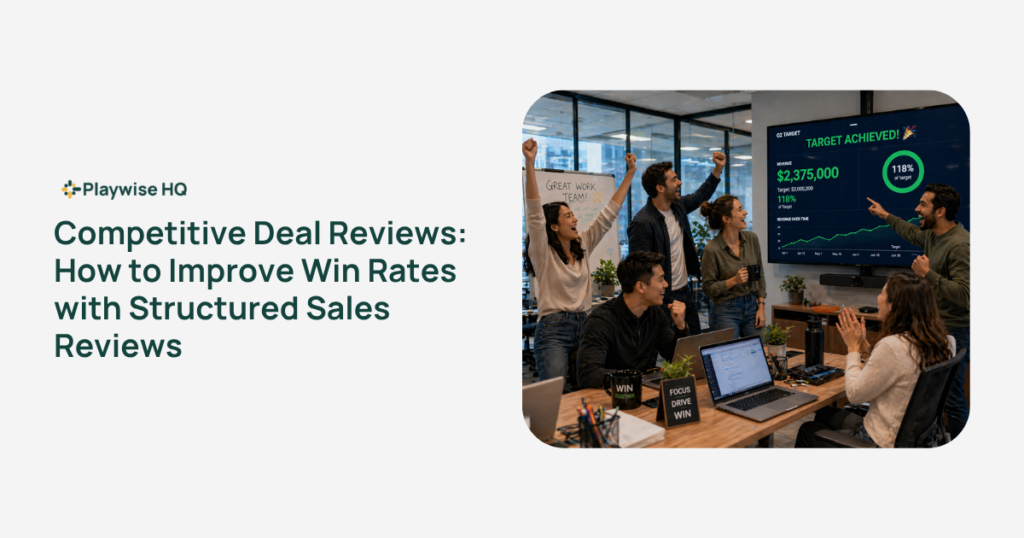
Most competitive deal reviews fail because insights get lost in conversations instead of becoming reusable assets. This guide shows how to turn every deal into a structured learning system that improves win rates and builds battle-tested competitive playbooks.
Scaling Competitive Intelligence: How to Scale a CI System From 5 to 500 Reps
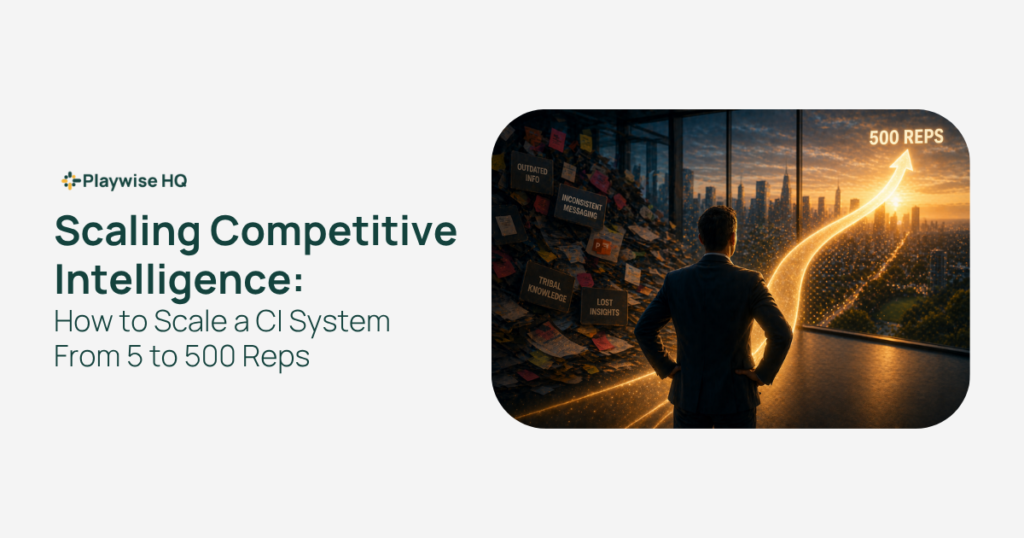
As your sales team scales, scrappy competitive intel quickly turns into a liability—stale battlecards, inconsistent messaging, and missed deals. This guide breaks down how to build a scalable competitive intelligence system that keeps reps aligned, sharp, and winning—whether you have 5 reps or 500.
Building a Win-Loss Feedback Loop That Actually Improves Win Rates

Most sales teams treat “Closed Lost” as the end of the story, but the real opportunity lies in turning those losses into actionable competitive insights. This post shows how to build a win-loss feedback loop that transforms lost deals into sharper battlecards, better positioning, and higher win rates.
How to Get Sales Teams to Actually Use Competitive Intelligence

Most competitive intelligence never gets used in a live deal—not because reps don’t want it, but because it’s delivered in ways they can’t use. This guide breaks down how to turn static battlecards into revenue-ready tools that reps actually use to win deals.
The 30-60-90 Day Plan for New Competitor Intelligence Managers
A practical, role-specific 30-60-90 day plan for new Competitive Intelligence managers, outlining onboarding milestones, governance setup, and quick-wins to launch a scalable battlecard program within enterprise sales teams.