
How to Build a Competitive Enablement Engine for Remote Sales Teams
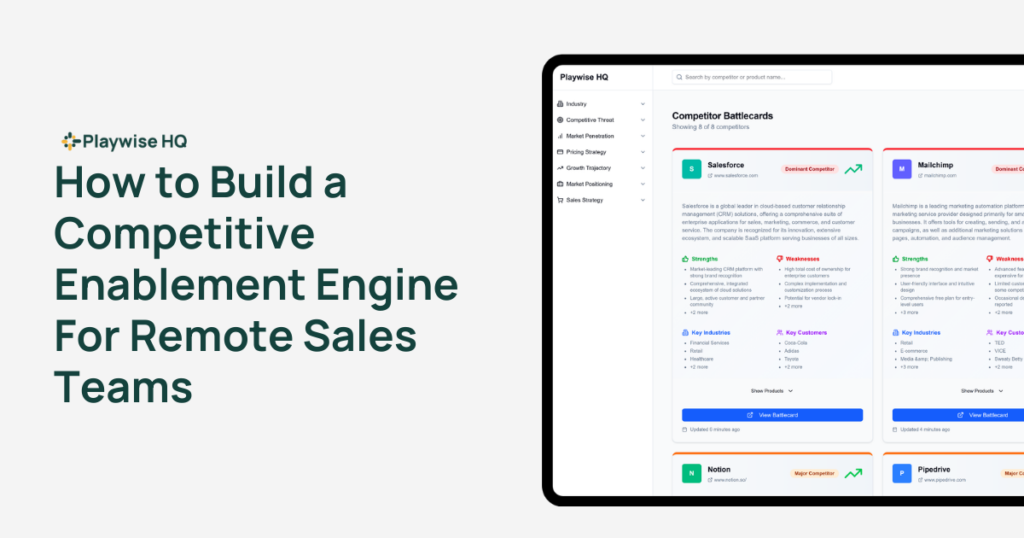
Remote and hybrid selling has broken the informal knowledge-sharing networks sales teams once relied on, leaving many reps blindsided by competitors during critical deal moments. This guide explains how to build a modern competitive enablement program—from battlecard design to adoption and measurement.
Win-Loss Interview Insights: Why B2B Buyers Chose the “Worse” Product — And What It Means for Your Competitive Strategy

Win-loss interviews reveal what buyers won’t tell you during the sales process — from implementation risk fears to the hidden cost of “we decided to wait.” Three B2B founders share the counterintuitive insights that forced them to rebuild their competitive strategy from the ground up.
Single-Page vs. Multi-Page Battlecards: Which Format Actually Wins Deals?
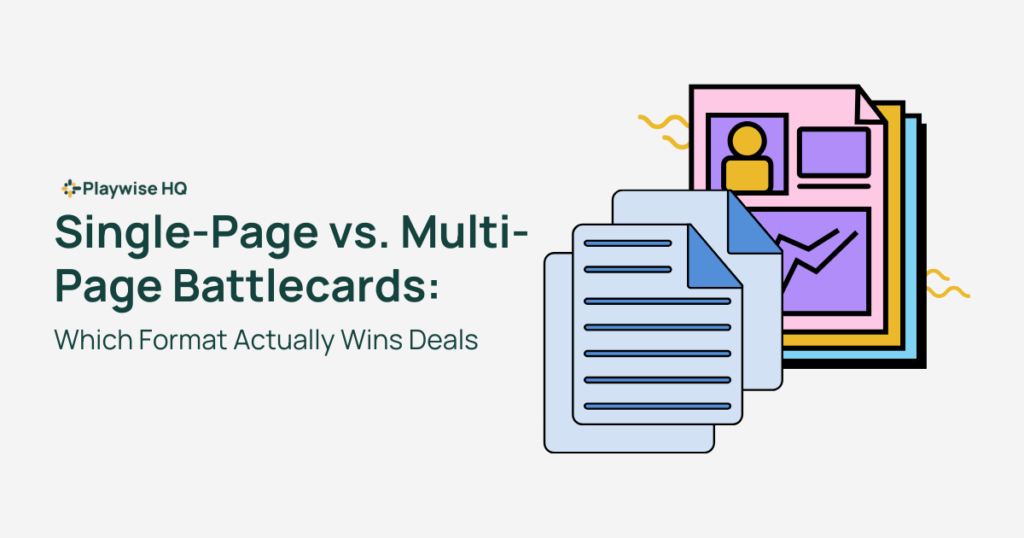
The single-page versus multi-page battlecard debate misses the real point. What matters isn’t how many pages your battlecard has – it’s whether reps can find the right answer in 10 seconds.
Battlecard Design Best Practices: Layout, Length, and Format That Actually Help Reps Win

Most battlecards fail not because the intelligence is wrong – but because the design makes it unusable in real selling moments. This guide breaks down the battlecard layout, length, and format principles that help reps find competitive answers in seconds. Learn how modern teams build battlecards that actually get used and improve win rates.
Build vs Buy: Should You Build Your Own Competitive Intelligence System?

Building a competitive intelligence system in-house may seem cheaper, but hidden development, maintenance, and content costs quickly outweigh platform subscriptions. This guide breaks down the real build vs buy decision and explains when purpose-built CI tools like Playwise HQ deliver faster ROI.
The SCOUT Framework: Complete Guide to Competitive Sales Discovery
Most sales teams excel at product discovery but completely miss competitive discovery—the art of surfacing threats and alternatives early in the sales process. The SCOUT Framework provides a systematic approach to uncover competitive intelligence in your first conversation, not your fifth.
How Often Should You Update Your Competitor Battlecards
Most battlecards start strong but quickly become dusty PDFs that nobody trusts. The solution isn’t updating everything constantly, it’s a tiered framework that matches update frequency to content volatility, from continuous field intel capture to quarterly strategic refreshes.
The Complete Guide to Competitive Intelligence Platforms for Sales Teams

66% of B2B deals are competitive, yet most sales teams enter these battles without the intelligence they need to win. This comprehensive guide covers everything you need to know about competitive intelligence platforms, from understanding the different types of CI tools available to evaluating vendors, driving adoption, and measuring ROI.
Best Tools for Creating Competitor Battlecards in 2026
Most battlecards look impressive and still lose deals. This guide reveals the best tools for creating competitor battlecards in 2026 — and why modern sales teams are abandoning static documents for living, AI-powered competitive systems.
5 Questions That Turn Sales Post-Mortems into Playbook Material

Most sales teams run win/loss debriefs, but few turn them into competitive advantage. Insights get lost in email threads or forgotten Slack messages instead of shaping future deals. The difference between good and great revenue teams lies in structure, asking the right five questions that transform post-mortems from reactive reflections into living intelligence.