
Klue vs AlphaSense (2026): Sales Battlecards vs Market Research
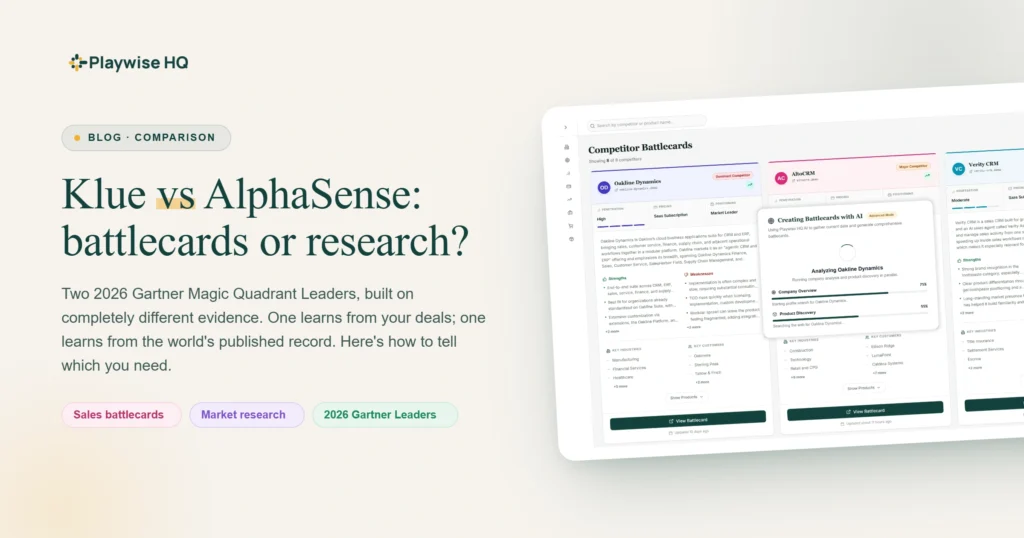
Klue and AlphaSense were both named Leaders in the same 2026 Gartner Magic Quadrant, but they run on completely different evidence. One learns from your deals. One learns from the world’s published record. Here is how to tell which one you need.
How to Prepare for a Deal Review Meeting: Checklists and Templates for Sales Managers and Reps
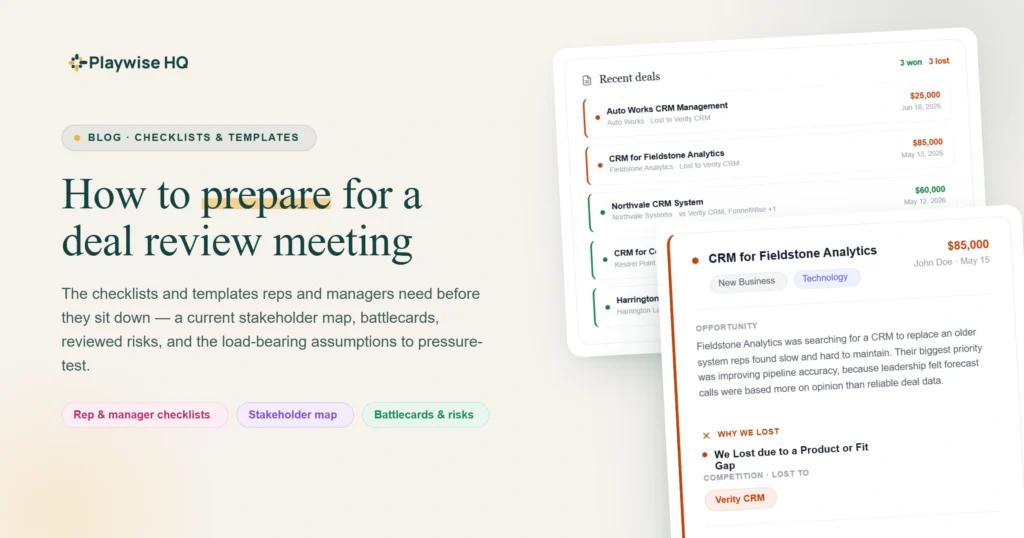
A deal review is decided before it starts: unprepared rooms do archaeology, prepared rooms do strategy. This guide covers both sides of the prep contract — the rep’s 15-minute checklist and the manager pre-work most guides never mention — plus the honest 5-minute version for weeks when time runs out.
How to Run a B2B Deal Review Meeting (Not an Overarching Sales Pipeline Review)
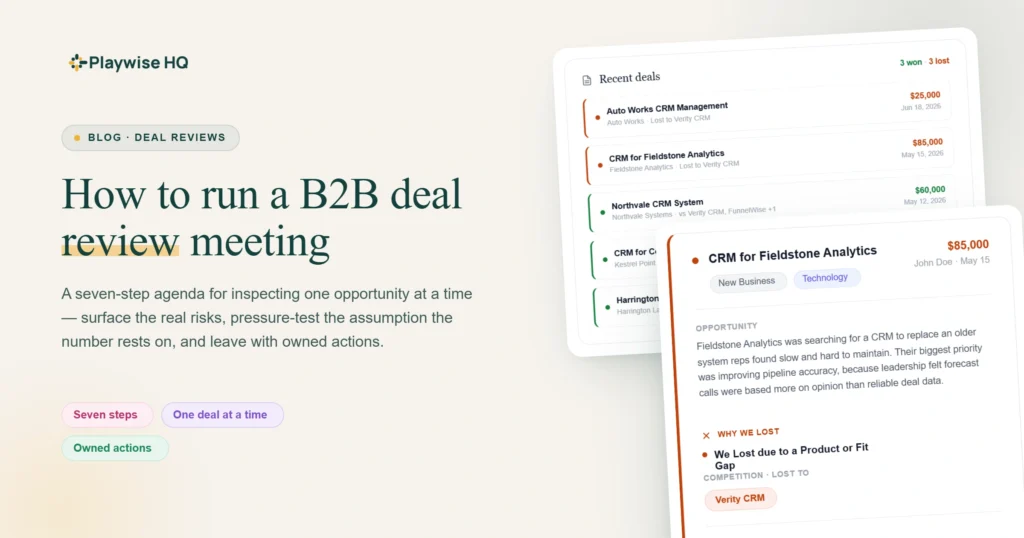
The best deal review isn’t a trial of the rep — it’s the deal getting access to more brains, and that only happens when the facilitator builds it in by design. This step-by-step guide walks through the seven steps of running the meeting, with the actual facilitation scripts for redirecting narrators, prosecutors, and optimists.
B2B Deal Reviews: How to Run an Effective Deal Review Process
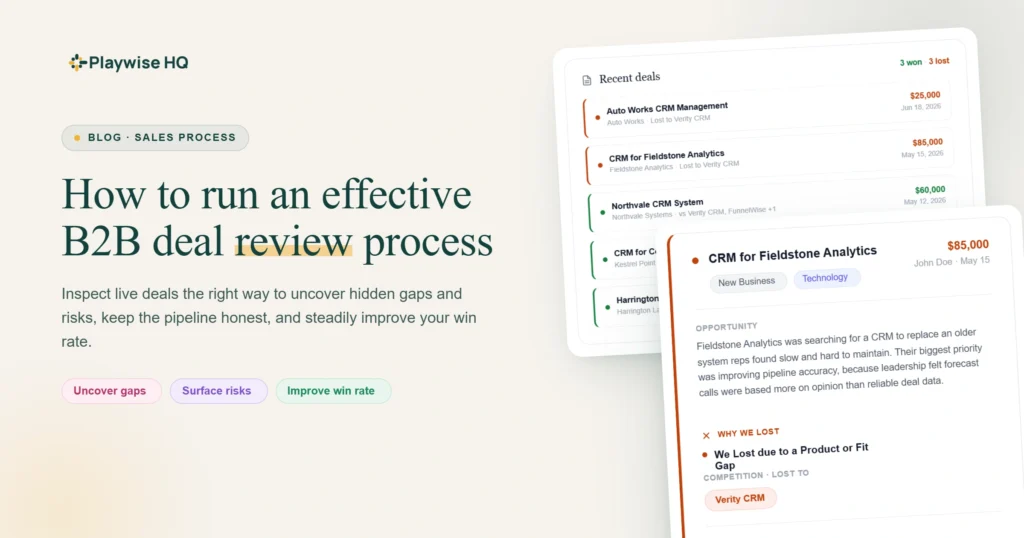
Most deal reviews are status theater — the rep narrates, the manager nods, and the risk that kills the deal goes unexamined for months. Drawing on 15 years in B2B sales (and a seven-figure deal lost to a stakeholder nobody had mapped), this guide covers the complete deal review process: which deals to review, the agenda, the questions, and an evidence-vs-hope scorecard — all ungated.
Crayon vs AlphaSense: Which Intelligence Platform Does Your Team Actually Need?
Crayon and AlphaSense sit in the same Gartner quadrant but answer different questions. One arms reps for deals. One arms analysts for decisions. Here is how to tell which one you are actually shopping for.
How to Understand Why Deals Are Lost – And What to Do Next
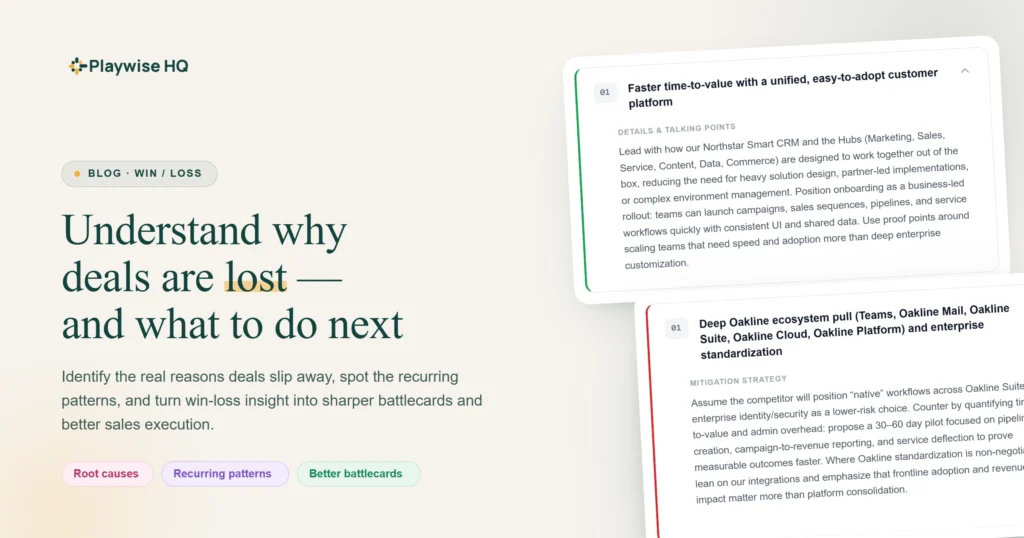
Most companies technically record why deals are lost, but the labels sitting in their CRM — price, competitor, timing, no decision — explain nothing about what actually happened or what the team should change. Understanding why deals are lost takes a repeatable process for capturing the immediate reason, the underlying cause, and the competitive context behind each outcome, then turning those patterns into guidance reps can use before the next deal reaches the same decision point.
Crayon vs Kompyte (2026): Full-Coverage CI vs Marketing First Intelligence
Crayon and Kompyte both watch what your competitors do in market, but one is a comprehensive, independent platform priced like enterprise software, and the other is an affordable monitor increasingly absorbed into Semrush. We compare coverage, battlecards, AI, pricing, and win-loss honestly — including the case for skipping both.
Klue vs Kompyte (2026): Sales-First Depth vs Affordable Marketing CI
Klue and Kompyte look similar on a feature grid, but they sit at different price tiers and answer different questions: Klue is the premium, sales-first platform built around battlecard depth and native win-loss, while Kompyte is the more affordable, Semrush-owned option built around monitoring competitors’ pricing, ads, and digital footprint. We compare both honestly — and ask the question most buyers skip: do you need a full competitive intelligence program at all, or just battlecards your reps will actually use?
Klue vs Crayon: Which Competitive Intelligence Platform Is Right for Your Team?
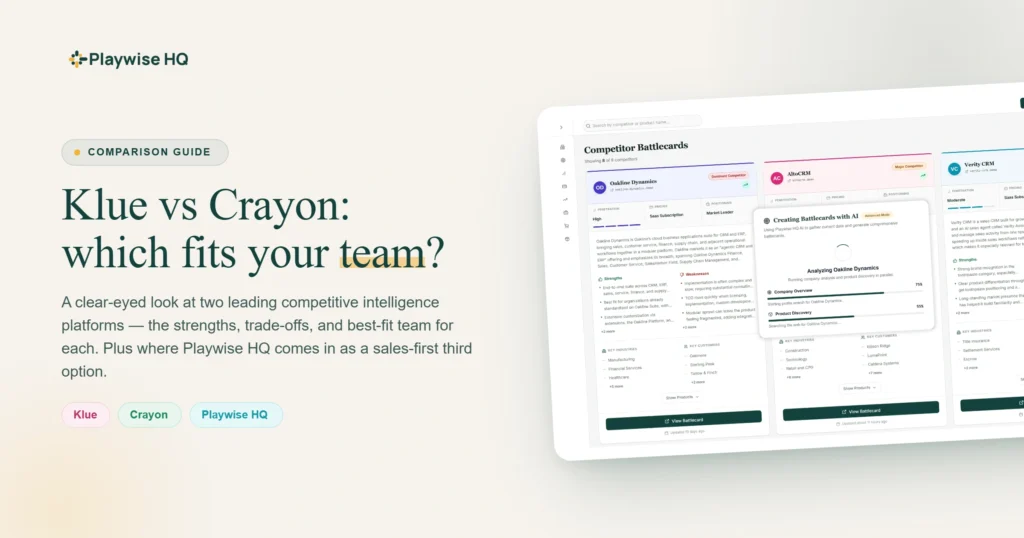
Klue leads on battlecard depth and native win-loss; Crayon leads on monitoring breadth — but both assume a dedicated CI owner, a five-figure budget, and a two-month rollout. This comparison walks the real decision honestly, including the question most buyers skip: are you buying a competitive intelligence program, or battlecards your reps will actually use?
How to Automatically Capture Competitive Intelligence from Sales Calls, CRM Notes, and Field Insights

Sales teams uncover valuable competitive intelligence every day in sales calls, CRM notes, win/loss feedback, and field insights — but most of it never makes it into the battlecards reps rely on. This guide explains how to automatically capture, structure, validate, and turn that field intelligence into sales-ready competitive guidance your team can actually use in live deals.