
Here’s an uncomfortable truth most enablement leaders already know but rarely say out loud: the majority of competitive content created for sales teams never gets used in a live deal.
Not because reps don’t want competitive intelligence. They do… desperately. In nearly every sales org survey, reps rank competitive insights among their top requests. The problem isn’t demand. It’s delivery. The content exists in the wrong format, lives in the wrong place, arrives at the wrong time, and speaks the wrong language for someone mid-conversation with a skeptical buyer.
The result? Reps improvise. They rely on tribal knowledge, half-remembered anecdotes, or whatever a colleague Slacked them last quarter. Meanwhile, the CI team wonders why their carefully researched battlecards have single-digit adoption rates, and enablement loses credibility with the very people they’re trying to serve.
This isn’t a content problem. It’s a systems problem, one that spans content design, workflow integration, governance, and change management. Solving it requires rethinking what competitive content adoption actually looks like in a modern revenue organization.
Why Sales Teams Ignore Competitive Content Today

Before you can fix adoption, you need to understand why it’s broken. And the reasons are more structural than most teams admit.
Common failure modes: scattered docs, outdated battlecards, and information overload
Most competitive content lives in Google Docs, Confluence pages, Notion databases, or slide decks buried three folders deep in a shared drive. Reps can’t find it when they need it. When they do find it, they can’t tell if it’s current. And when they open it, they’re confronted with a wall of text that reads like an analyst report, not a conversation guide.
This is the classic “content graveyard” problem. The intel might be excellent. But if a rep has to search through a wiki, and parse a 15-page document to find one rebuttal, they won’t do it. They’ll wing it instead.
The gap between competitive intelligence and “seller-ready” content
There’s a meaningful difference between competitive intelligence and competitive content that’s ready for a sales conversation. Raw CI, pricing data, feature comparisons, product announcements, is valuable input. But it’s not output a rep can use mid-call.
Seller-ready battlecard narratives bridge this gap. They translate “Competitor X launched a new API integration” into “Here’s how to reframe the conversation when a prospect brings up Competitor X’s new integration, and here’s why our approach is architecturally different.” That translation step is where most programs stall.
How low adoption undermines everything
Low competitive content adoption isn’t just a usage metric problem. It cascades. Reps lose deals they should win. Win rates against key competitors decline. The CI team’s budget gets questioned. Enablement loses influence. And the organization slowly accepts that “competitive intelligence is nice to have”, which is the death knell for any CI program.
As Paul Towers, CEO of Playwise HQ, puts it: “The ROI of competitive intelligence isn’t measured by how much you know about competitors. It’s measured by how often that knowledge changes the outcome of a deal.”
Redefining Competitive Content as “Revenue-Ready” Battlecards
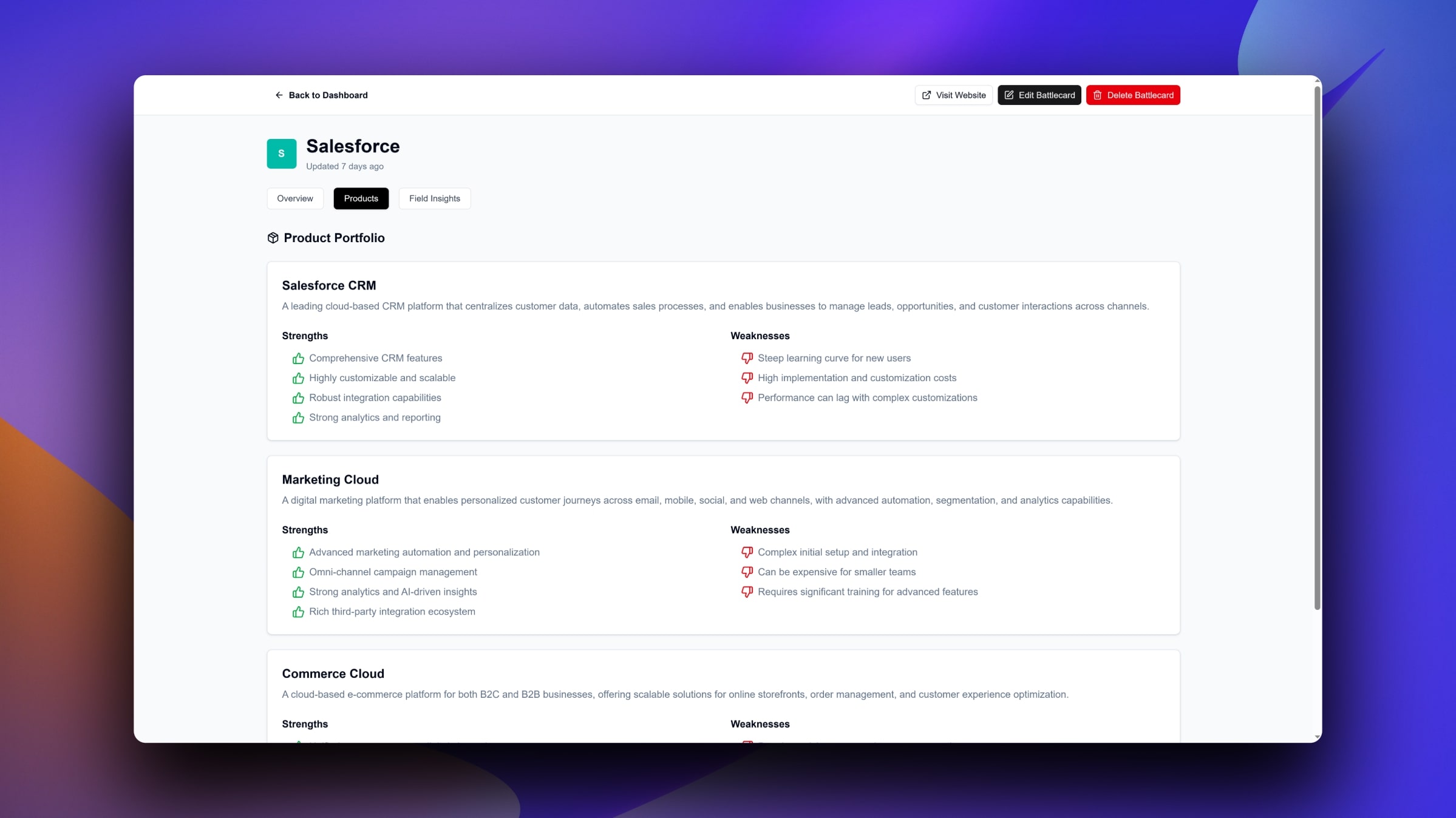
The shift starts with redefining what competitive content is for. It’s not a reference document. It’s a revenue tool, and it should be designed, structured, and delivered like one.
What makes a battlecard truly sales-ready
A revenue-ready battlecard has three characteristics:
- Structured for speed. Reps should find what they need in under 10 seconds. That means clear sections, consistent formatting, and a hierarchy that puts the most-used content (positioning, objections, differentiators) front and center.
- Written in sales language. Not analyst language, not marketing language. The content should sound like something a top-performing rep would actually say to a buyer. First-person phrasing. Conversational tone. Specific, concrete claims, not vague positioning statements.
- Calibrated to depth. A battlecard for a discovery call needs different content than one for a technical evaluation or a pricing negotiation. The best programs build layered content that matches deal stage and buyer persona.
Aligning competitive content with sales motions, stages, and personas
Different stakeholders care about different things:
- The economic buyer wants to understand TCO, risk, and strategic fit.
- The technical evaluator wants architecture details, integration depth, and security posture.
- The end user or champion wants ease of use, onboarding speed, and day-to-day workflow impact.
Having role specific filtering for sellers on things like objection handling strategic transforms competitive content from a static reference into a dynamic toolkit. A rep preparing for a CFO meeting pulls different content than one prepping for a technical deep-dive. Both should find exactly what they need, fast.
Turning raw intel into narratives, talk tracks, and objection handling
This is where the real work happens. Raw intelligence needs to be converted into:
- Narrative-based competitive messaging that frames your solution’s strengths in the context of a specific competitor’s weaknesses, without trash-talking.
- Objection handling talk tracks that give reps specific language for the five or six objections they’ll hear most often against each competitor.
- Trap-setting questions that subtly expose a competitor’s limitations during discovery.
Mini-scenario: The CFO objection on price. Your rep is in a final-stage negotiation against Competitor Y, who has undercut your price by 20%. A generic battlecard says “emphasize value over cost.”
A revenue-ready battlecard gives the rep a specific talk track: “I understand price is a factor. What we’ve seen with customers who evaluated [Competitor Y] is that the initial savings are offset by implementation costs that aren’t in the initial quote, specifically around [data migration, custom integrations, dedicated support tiers]. Would it be helpful if I walked through a side-by-side TCO comparison our finance team put together?” That’s the difference between content that exists and content that wins deals.
Designing Competitive Content Sales Teams Will Actually Use
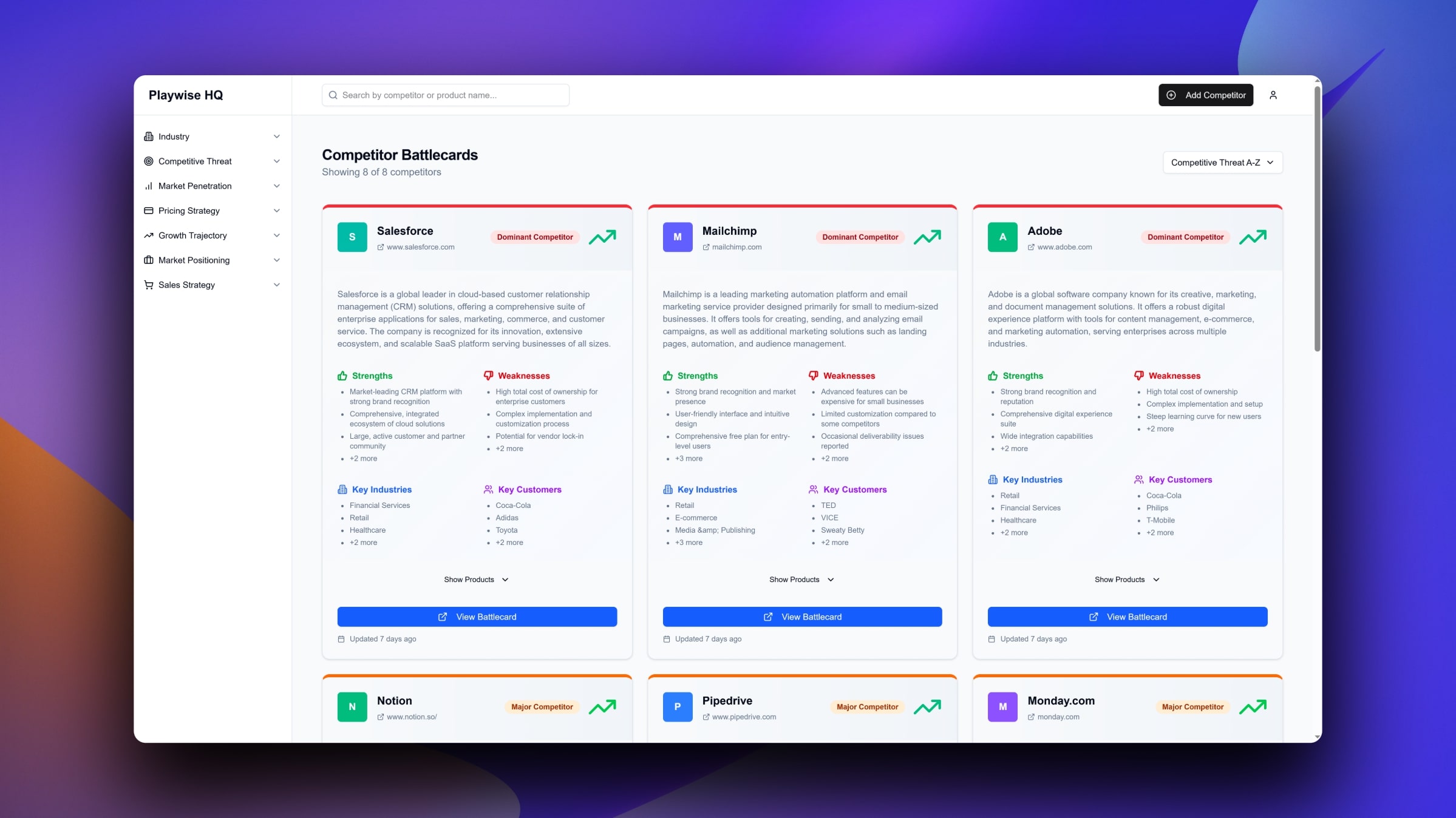
Design determines adoption. If the content isn’t built for how reps actually work, no amount of training or mandates will drive usage.
Standardizing battlecard templates for consistency and speed
Standardized battlecard templates serve two purposes: they make content faster to create and faster to consume. When every battlecard follows the same structure, reps develop muscle memory. They know exactly where to find the positioning section, the objection handling, the pricing comparison, regardless of which competitor they’re looking at.
Templates for battlecard standardization should include consistent sections for:
- Competitor overview (one paragraph, not a biography)
- Key differentiators (yours vs. theirs, in a scannable format)
- Common objections and responses
- Pricing/packaging comparison
- Win/loss themes
- Trap-setting discovery questions
Keeping content concise, skimmable, and conversation-first
Every section of a battlecard should pass the “glance test”: can a rep extract the key point in 5 seconds while on a call? If not, it’s too long.
Use bullet points, bold key phrases, and lead with the punchline. Save supporting detail for expandable sections or linked resources. The battlecard is a conversation guide, not a research paper.
Involving top reps and frontline managers in content design
The fastest way to build content reps will actually use is to involve reps in building it. Your top performers already have the talk tracks, the objection responses, and the competitive narratives that work. The CI team’s job is to validate, structure, and scale that knowledge, not to invent it in isolation.
Frontline managers are equally critical. They hear competitive dynamics in pipeline reviews daily. They know which competitors are showing up more often, which objections are stumping reps, and which deals are slipping. Building a feedback loop with them through sales-sourced competitive insights ensures your content reflects the reality of live deals.
Contextual Delivery: Bringing Competitive Battlecards into CRM & Workflows

Even perfectly designed content fails if it lives in the wrong place. The single biggest lever for competitive content adoption is contextual delivery, putting the right battlecard in front of the right rep at the right moment, inside the tools they already use.
Why ease access beats hidden libraries, wikis, and static docs
Reps don’t want to browse company intranets. They want competitive intel they can bring up during the call, or in the 10 minutes before one. That means competitive content must be easily accessible and fast to navigate.
Sales specific competitor battlecard platforms like Playwise HQ are designed to address this need. They provide Reps with everything they need and don’t burden them with a list of folders, PDFs labeled v1, v2 and v3 or information that was last created in 2020.
Using CRM integrations to link competitor battlecards to deals won and lost
The real power of contextual battlecards goes beyond access. When competitive content is connected to your CRM, you can link battlecard usage to deal outcomes. Which battlecards were viewed before deals that closed? Which competitors are appearing on lost opportunities where no battlecard was accessed? This creates a data-driven feedback loop that makes your CI program smarter over time — a core capability of win-loss analysis.
Mini-scenario: The technical evaluator surprise. Your AE is two weeks into an enterprise deal when the prospect’s technical team introduces a new requirement: real-time data sync with a legacy ERP system. The AE knows Competitor Z has been pitching this capability. Instead of scrambling to find intel, the AE opens the battlecard, and finds a specific section on ERP integration claims vs. reality — including a trap-setting question about sync latency that exposes Competitor Z’s limitation. The AE uses it in the next call. The deal stays on track. That’s what contextual delivery looks like in practice.
Governance & Standardization for Up-to-Date Competitive Content

Nothing kills battlecard adoption faster than stale content. A rep who pulls up a battlecard and finds outdated pricing or a competitor feature that launched six months ago will never trust that content again. And they’ll tell their teammates not to bother either. This is why battlecards go stale, and why governance isn’t optional.
Creating a single source of truth
A centralized knowledge repository for intel eliminates the “which version is current?” problem. Every battlecard, every competitive insight, every objection handling track lives in one place with one canonical version. No more competing Google Docs, no more outdated slide decks circulating via email.
Roles, ownership, and review workflows
Effective competitive content governance requires clear ownership:
- CI team owns research, validation, and strategic updates
- Enablement owns formatting, distribution, and training
- Sales leadership owns reinforcement and adoption
- Subject matter experts (product, engineering, customer success) contribute domain-specific validation
Review workflows should include approval gates before content goes live, ensuring accuracy without creating bottlenecks.
Version control and update cadences
Establish update cadences to avoid stale intel:
- Monthly — review all active battlecards for accuracy
- Quarterly — conduct deeper competitive reviews, refresh positioning and narratives
- Event-driven — update immediately when a competitor announces a major pricing change, product launch, or acquisition
Version control for battlecards ensures you can track what changed, when, and why, and that reps always see the latest version without having to check.
Communicating updates to reps
An update that reps don’t know about is the same as no update at all. Build a lightweight communication cadence: a Slack notification when a battlecard is refreshed, a 60-second video walkthrough of what changed, or a callout in the weekly sales standup. Real-time competitive intelligence updates only matter if the people who need them actually receive them.
Driving Adoption: Change Management and Sales Enablement Tactics
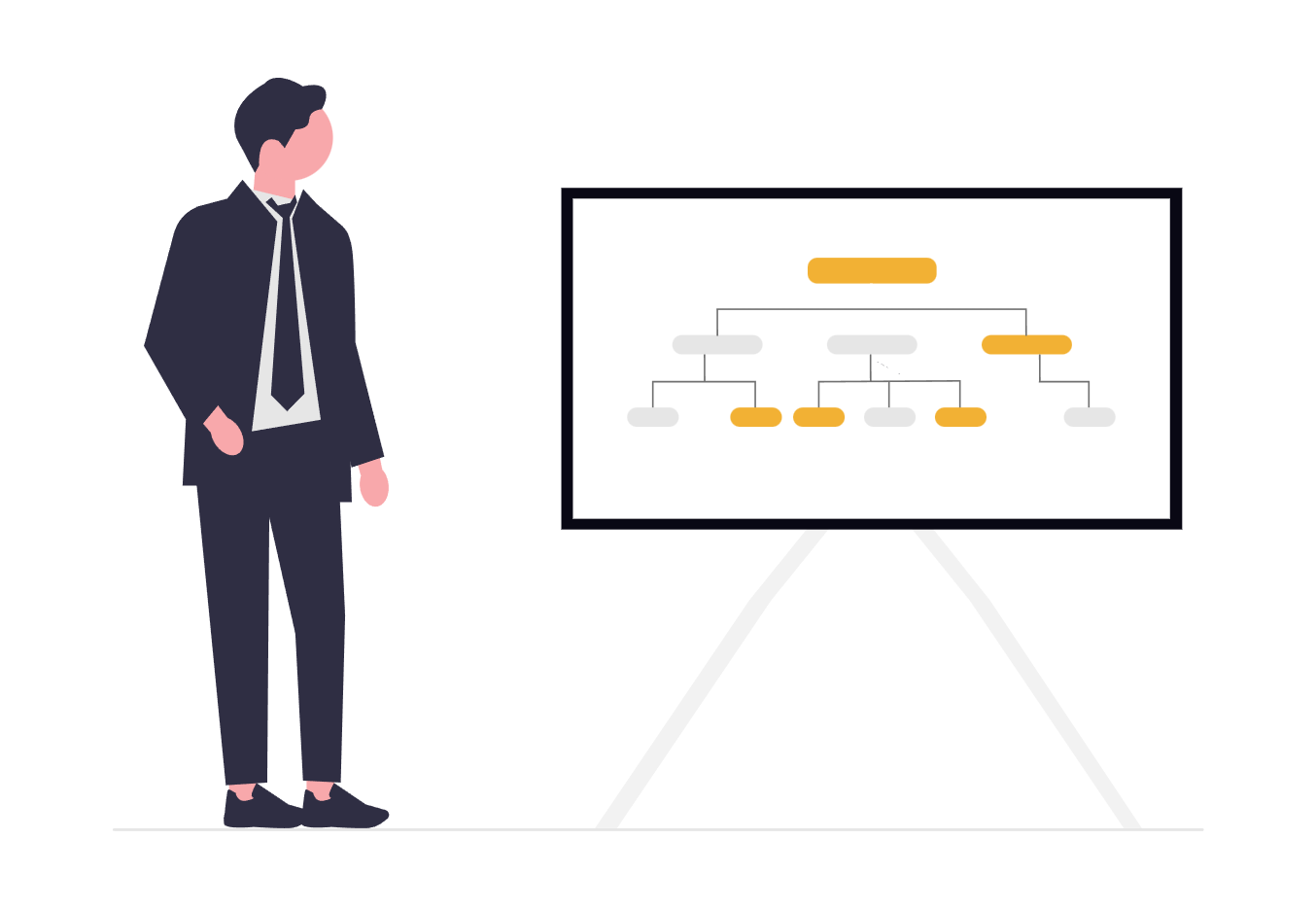
Content and delivery are necessary but not sufficient. Competitive intelligence adoption requires deliberate change management, treating it as a behavior change initiative, not a content launch.
Positioning competitive content as a performance lever
Reps don’t want “more docs.” They want to win more deals with less effort. Frame competitive content accordingly: “This battlecard helped three reps close deals against Competitor X last month” is infinitely more compelling than “We updated the competitive battlecard, please review.”
Training formats that drive usage
The most effective formats for sales enablement battlecards are experiential, not passive:
- Live battlecard walkthroughs — a CI or enablement lead walks through a battlecard in the context of a real deal scenario, showing reps exactly how to use each section.
- Call reviews — pull recordings of deals where competitive content was (or wasn’t) used effectively. Debrief as a team.
- Role-plays — pair reps up and have them practice objection handling using the battlecard talk tracks. This builds muscle memory faster than any slide deck.
Incentivizing use
Share win stories publicly. When a rep credits a battlecard in their deal debrief, amplify it. Create peer recognition moments. Some teams use leaderboards showing battlecard usage correlated with win rates, not to shame low adopters, but to make the connection between usage and outcomes visible.
Partnering with frontline managers
Frontline managers are the adoption multiplier. When a manager asks “What does the battlecard say about Competitor X’s pricing?” in a pipeline review, it signals that competitive content is expected, not optional. Coach managers to reference battlecards in deal strategy sessions, and adoption will follow.
Using Adoption Analytics to Tie Competitive Content to Win-Rate Impact

You can’t improve what you don’t measure. Adoption analytics for win rates close the loop between content creation and revenue impact.
What to track
- Battlecard views — which cards are being accessed, how often, and by whom
- Usage in opportunities — are reps accessing competitive content on deals where a competitor is tagged?
- Deal outcomes — win rates on opportunities where battlecards were used vs. where they weren’t
- Content feedback — rep ratings, comments, and suggestions on specific battlecards
Connecting usage to revenue metrics
The most powerful insight in competitive enablement is the correlation between battlecard usage and deal outcomes. Track:
- Win rate lift — comparing win rates on competitive deals with and without battlecard access
- Cycle length — do deals where reps use competitive content close faster?
- Average selling price (ASP) — does competitive content help reps hold price against discounting pressure?
Identifying gaps and high performers
Analytics reveal which battlecards are high-performing (high usage, correlated with wins) and which have gaps (low usage, or high usage but no win-rate improvement). The latter signals content quality issues. The former signals content worth replicating.
Creating a continuous improvement loop
The best competitive content programs aren’t static. They run a continuous loop: CI creates content → reps use it → analytics reveal what works → reps provide field feedback → CI refines content → repeat. This loop is what separates competitive intelligence programs that deliver measurable ROI from those that slowly fade into irrelevance.
Implementing a Competitive Content Platform Like Playwise HQ
Why DIY breaks at scale
Google Docs, Notion templates, and slide decks work when you have five reps and two competitors. They break when you have 50 reps, 15 competitors, multiple product lines, and a distributed team across time zones. There’s no version control, no contextual delivery, no analytics, and no governance workflow. The content becomes a liability instead of an asset.
As Paul Towers notes: “Most CI programs don’t fail because of bad intelligence. They fail because the last mile, getting the right insight to the right rep at the right moment, was never engineered.”
How a centralized platform improves execution
A purpose-built competitive battlecard platform like Playwise HQ solves the structural problems that kill adoption:
- Structured battlecard builder with standardized templates that enforce consistency
- Centralized repository that eliminates scattered docs and conflicting versions
- CRM integration that ties competitive deals to their respective battlecard
- Collaboration workflows that bring reps, CI, and enablement into a shared feedback loop
Leveraging real-time updates and feedback loops
When a competitor changes pricing, launches a feature, or shifts messaging, your battlecards need to reflect that change within days, not quarters. A platform with real-time update capabilities and built-in feedback mechanisms from sales ensures your content stays current and field-validated.
What to Implement This Month
If you’re ready to move from low adoption to revenue-ready competitive content, here’s a focused checklist for the next 30 days:
- Audit your top 5 competitor battlecards for accuracy, recency, and sales-readiness
- Interview 3 top-performing reps to capture their competitive talk tracks and objection responses
- Standardize your battlecard template with consistent sections across all competitors
- Identify your CRM integration path
- Assign clear ownership for each competitor battlecard (creator, reviewer, approver)
- Set an update cadence — monthly reviews, quarterly deep refreshes, event-driven updates
- Run one live battlecard walkthrough with your sales team using a real deal scenario
- Establish a baseline metric — current battlecard usage rate and win rate on competitive deals
- Create a Slack channel or feedback mechanism for reps to flag outdated content or share field intel
- Brief frontline managers on how to reference battlecards in pipeline reviews
Common Pitfalls to Avoid
Even well-intentioned competitive content programs stumble. Watch for these traps:
- Over-engineering the first version. Ship a good-enough battlecard and iterate based on rep feedback. Perfection delays adoption.
- Building for CI, not for sales. If your battlecard reads like a competitive analysis report, reps won’t use it. Write for the conversation, not the briefing.
- Launching without manager buy-in. Reps follow their managers’ lead. If managers don’t reference or reinforce competitive content, reps won’t adopt it.
- Ignoring the feedback loop. A battlecard without a mechanism for reps to flag issues or contribute insights will decay rapidly. Adoption is a two-way street.
- Measuring creation instead of consumption. The number of battlecards you’ve built is vanity. The number being used in live deals — and correlated with wins — is the metric that matters.
Turning Competitive Intelligence into a Revenue Engine
The gap between having competitive intelligence and having it change deal outcomes is the gap between a CI program that’s tolerated and one that’s indispensable.
Closing that gap requires treating competitive content adoption as a systems challenge, not a content volume challenge. It means designing revenue-ready battlecards that speak the language of sales conversations, delivering them contextually inside the tools reps already use, governing them with clear ownership and update cadences, and measuring their impact on the metrics that matter.
The organizations that get this right don’t just win more competitive deals. They build a compounding advantage: every deal generates field intelligence that makes the next battlecard better, which makes the next rep more effective, which generates more wins and more intelligence. It’s a flywheel, and it starts with the decision to stop treating competitive content as a document and start treating it as infrastructure.
Ready to see what competitive content adoption looks like when the systems actually work? Book a demo of Playwise HQ and see how purpose-built battlecard delivery, CRM integration, and adoption analytics can turn your competitive intelligence into a measurable revenue lever.