
Notion Battlecard Alternative

Outgrown your Notion battlecards? Here is the next step

Notion is a flexible and affordable place to create your first competitor battlecards. But as your sales team grows, maintaining pages, capturing field intel, connecting competitive insights to deals, and keeping guidance useful becomes a process of its own. Playwise HQ gives revenue teams a purpose-built system for AI competitor battlecards, objection handling, sales-sourced intel, and competitive deal learning.

Playwise HQ vs Notion For Battlecards

Battlecards reps open in the live deal

Playwise HQ

Cards that stay fresh without a babysitter

Playwise HQ

Rep-sourced field intel and win-loss

Playwise HQ

A flexible all-in-one workspace

Notion

Already built battlecards in Notion? Move from a collection of pages to a competitive sales workflow designed around rep adoption and real deal learning.

AI competitor battlecards built for sales conversations
Dedicated objection handling and talk tracks
Sales-sourced intel reviewed and added to battlecards
Competitive deal outcomes and win-loss themes by competitor
i

Full disclosure: we build Playwise HQ, so this comparison is not neutral. But it is not a takedown either, and we mean that. We publish a free Notion battlecard template, so Notion is often where teams meet us first. Notion is a genuinely capable, secure, well-loved workspace, and for a small team with one owner and a couple of competitors it is a perfectly good place to start. This page is about what happens next, when DIY battlecards start to break, and whether a purpose-built tool is worth it by then.


Quick Verdict

Is Playwise HQ a good Notion alternative for battlecards?

Playwise HQ is a strong Notion alternative for teams that have outgrown DIY competitor pages and need battlecards, objection handling, sales-sourced intel, CRM-connected competitive outcomes, and win-loss learning in one purpose-built workflow. Notion remains a good choice if you have only a few competitors, already use it extensively, have someone responsible for maintaining each page, and do not yet need deeper sales-specific workflows.
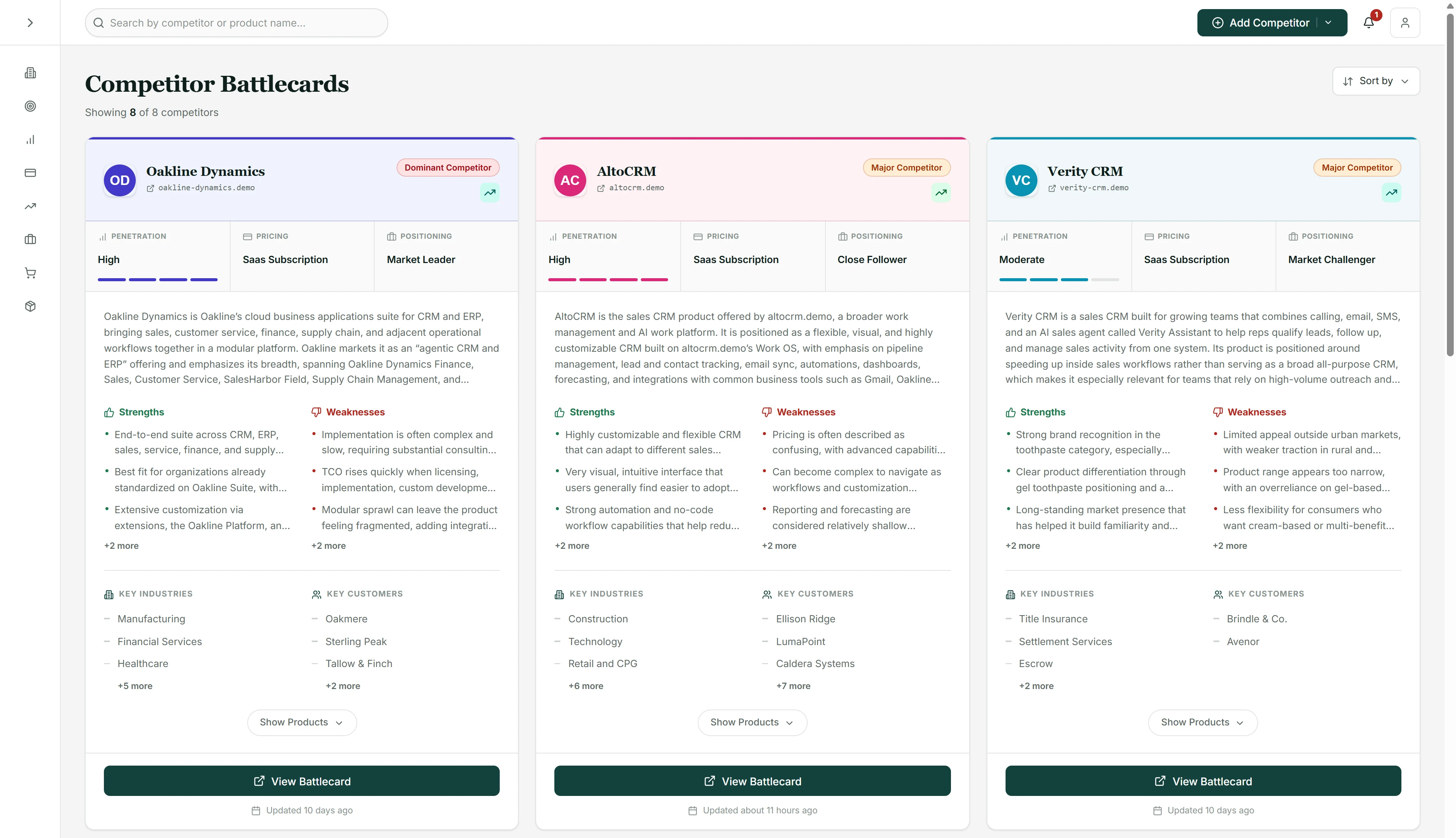
Playwise HQ Competitor Battlecard Dashboard Screenshot

Choose Playwise HQ

Playwise HQ is built for teams that need reps to find, use, and improve competitive guidance throughout active sales opportunities.

You need dedicated competitor battlecards and objection handling

You want rep-submitted field intel feeding back into approved guidance

You need competitive deal outcomes and win-loss learning connected to specific competitors

Choose Notion

Notion is a strong starting point for teams that want to document competitor knowledge without adding a dedicated platform.

You have only a few competitors and a small sales team

You want rep-submitted field intel feeding back into approved guidance

Someone has the time and discipline to design, review, and maintain the battlecards

The Short Version

Notion is a strong starting point for teams that want to document competitor knowledge without adding a dedicated platform.

Notion is a flexible place to build and store DIY competitor battlecards.

Playwise HQ is a purpose-built platform for creating, governing, using, and improving them. Notion has capable AI, databases, automations, templates, integrations, and enterprise search.

Playwise HQ applies those workflows specifically to competitive selling.

Notion works well at the beginning of the battlecard maturity curve. Playwise HQ is the natural next step when maintenance, adoption, field intel, and deal learning become difficult to manage manually.

Quick Comparison Table

Playwise HQ vs Notion battlecards at a glance

Notion gives teams a flexible canvas for designing their own battlecard system. Playwise HQ gives teams a battlecard system that is already structured around sales reps, competitors, objections, field intel, and competitive deal outcomes.

Notion
Playwise HQ
Best fit
Which team and operating model is each option best suited to?
Small teams that want a flexible, low-cost DIY starting point and already use Notion.
Sales-led teams that need battlecards, objections, field intel, and competitive deal guidance at scale.
Primary use case
What is the main job the product is designed to perform?
General documentation, databases, wikis, projects, knowledge management, and customizable internal workflows.
Create, manage, distribute, and improve competitor battlecards for revenue teams.
Starting point
How easy is it to start documenting competitors?
Easy if the team already uses Notion or starts with a battlecard template. PLAYWISE HQ WINS
Free starting point with a battlecard-specific workflow already in place.
Battlecard structure
How much work is required to design the battlecard system?
The team designs its own templates, properties, databases, views, ownership, and review processes. PLAYWISE HQ WINS
Competitors, products, battlecard guidance, objections, field intel, and outcomes are native product concepts.
Flexibility
How much freedom does the team have to design custom pages and workflows?
Extremely flexible across docs, databases, relations, layouts, projects, and custom processes. PLAYWISE HQ WINS
More constrained because it is purpose-built around competitive sales workflows.
AI capabilities
How does AI support battlecard creation and maintenance?
General-purpose workspace AI for drafting, summaries, research, enterprise search, autofill, and custom agents.
AI focused specifically on generating and improving competitor battlecards and sales guidance.
Objection handling
How directly does the system support competitor-specific objections?
Objections can be documented using pages, templates, properties, or linked databases designed by the team. PLAYWISE HQ WINS
Dedicated objection-handling workflow tied to competitors, products, personas, and approved responses.
Sales-sourced intel
How does the system capture what reps learn in active deals?
Can be constructed using forms, databases, Slack automations, meeting notes, and custom agents. PLAYWISE HQ WINS
Rep-submitted competitive insights are a core moderated workflow tied directly to battlecard updates.
CRM deal outcomes
How directly are competitor insights connected to won and lost opportunities?
Possible through APIs, connectors, custom databases, or manual links, but not the default battlecard workflow. PLAYWISE HQ WINS
Competitive deal outcomes connect CRM opportunities with specific competitors and guidance.
Win-loss learning
Can teams identify recurring win and loss themes by competitor?
Can be recorded manually if the team designs and maintains the required databases and reporting. PLAYWISE HQ WINS
Competitor-specific win-loss records and themes are part of the competitive sales workflow.
Rep adoption
How easy is it for reps to find and use competitive guidance?
Depends on information architecture, search, naming, page length, training, and internal adoption discipline. PLAYWISE HQ WINS
Designed around rep access to concise competitor guidance and sales-specific workflows.
Total ownership effort
What internal work is required beyond the software license?
Requires the team to design, maintain, govern, integrate, and continually improve the DIY system. PLAYWISE HQ WINS
Reduces the need to design the underlying battlecard process and data model internally.

Comparison based on publicly available information and research reviewed on 21 July 2026. Product capabilities, pricing, packaging, AI allowances, integrations, and positioning may change. Review each vendor’s current documentation before making a purchasing decision.


The Real Difference

A flexible workspace vs a purpose-built battlecard system

Notion can absolutely be used to create competitor battlecards.

A team can build a competitor database, create a template for each card, add strengths and weaknesses, document objections, link related assets, assign an owner, record review dates, and use Notion AI to summarize or draft content.

For a small team, that may be all that is required.

The difference appears when the system needs to operate beyond documentation.

As the number of competitors, reps, opportunities, objections, field insights, and updates grows, the team must design and maintain increasingly complex databases, forms, automations, permissions, integrations, and governance rules.

Playwise HQ starts with those competitive sales workflows already built into the product.

The better question is not:

Can Notion create battlecards?

It can.

The better question is:

Do you want to build and maintain the battlecard system yourself, or use one designed specifically for competitive selling?

Playwise HQ Centre of Gravity

Playwise HQ is focused on helping sales teams create AI competitor battlecards, handle buyer objections, capture what reps hear in the field, and learn from competitive wins and losses.

Notion gives teams powerful building blocks for docs, databases, wikis, AI, projects, forms, automations, enterprise search, and custom workflows. Teams decide how those building blocks should become a battlecard system.

!

Choose Notion if your team wants the freedom to build and maintain its own battlecard process. Choose Playwise HQ if you want the battlecard, field-intel, objection, and deal-learning workflow already built for you.
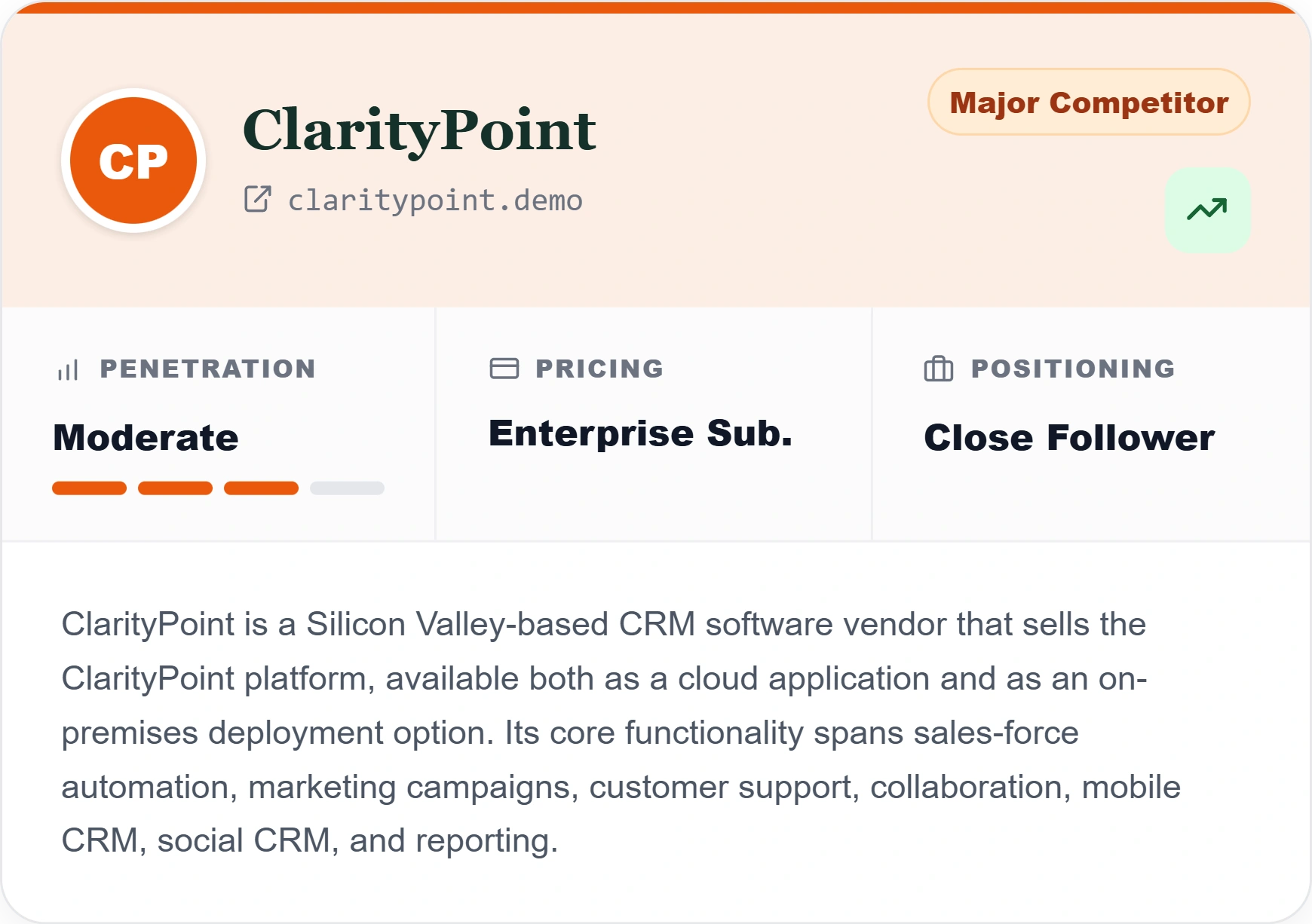

Battlecards

Playwise HQ vs Notion for competitor battlecards

Notion is a legitimate way to create your first competitor battlecards. Teams can start with a template, create one page per competitor, add structured database properties, and customize every section.

That flexibility is useful when the team is still deciding what information belongs on a battlecard.

But flexibility also means the team must design the system itself. Someone needs to choose the fields, create the views, decide who can edit content, establish review cadences, manage consistency, and make sure reps know where to find the right page.

Playwise HQ provides a battlecard-specific structure from the beginning. Competitors, products, strengths, weaknesses, objections, field insights, deal outcomes, and win-loss learning are all part of the same purpose-built workflow.

Playwise HQ Condensed Competitor Battlecard Header

Key Takeaway:

Choose Notion if your team wants the freedom to build and maintain its own battlecard process. Choose Playwise HQ if you want the battlecard, field-intel, objection, and deal-learning workflow already built for you.
Explore competitor battlecards >

Built For Reps

A battlecard only works when reps can find and trust it

A well-designed Notion page can contain excellent competitive guidance. The harder problem is getting reps to open it when a competitor appears in a live conversation.

DIY battlecards often depend on reps remembering where the page lives, searching for the right competitor, interpreting a long document, and trusting that the information is still current.

Notion can improve findability through databases, naming conventions, verified pages, enterprise search, and links from other systems. But the team still owns the information architecture and adoption process.

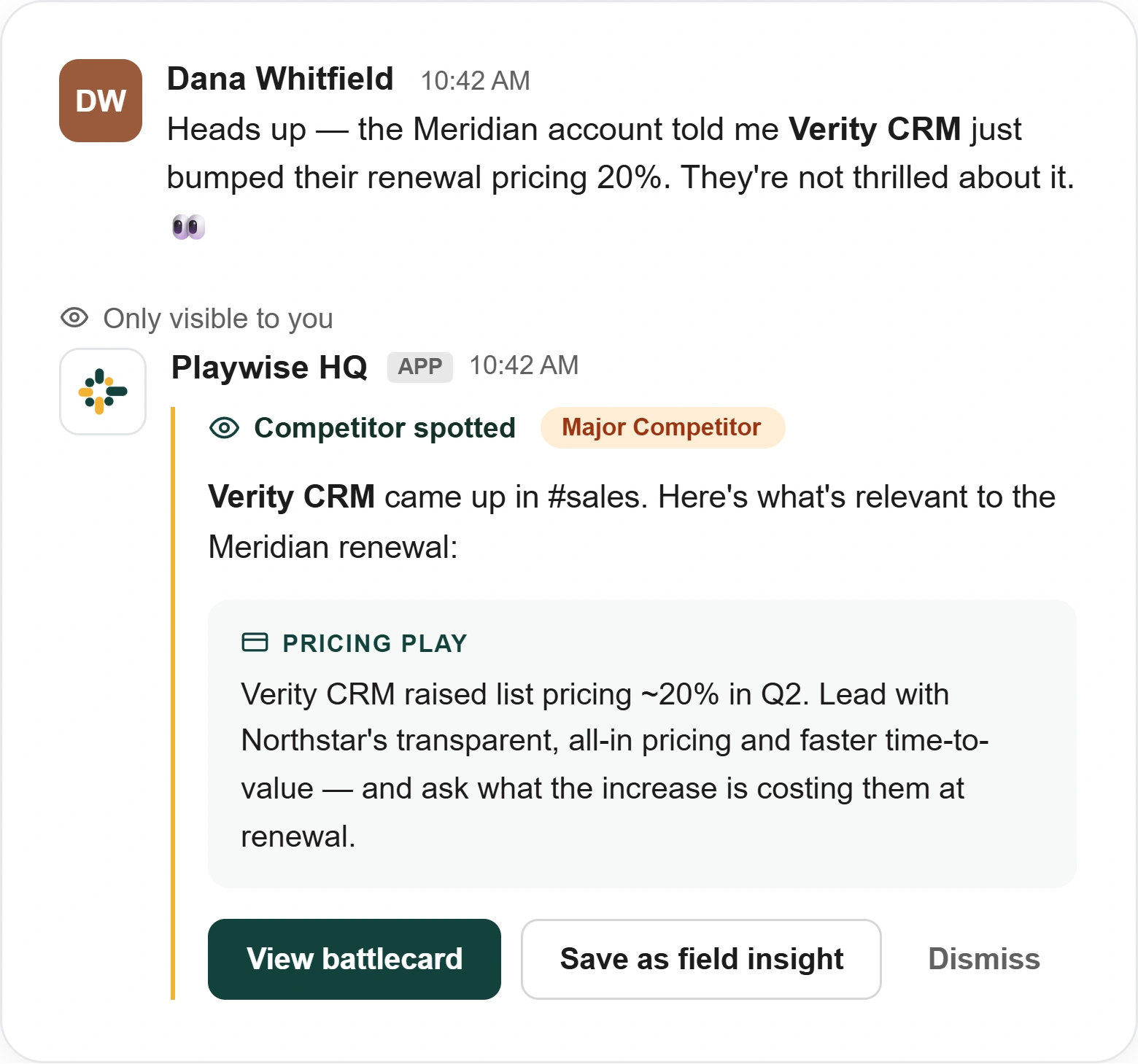
Playwise HQ is designed specifically around the rep-facing battlecard experience, making competitor guidance easier to organize, govern, and use as part of the sales workflow.

Playwise HQ - Competitive Listening in Slack

Key Takeaway:

Notion can store the content. Playwise HQ is built around getting competitive guidance into the hands of sales reps when it matters.

Explore Slack Integration >

START FASTER

Build your first competitor battlecard before your next sales meeting

You do not need a full competitive intelligence program to help reps handle competitive deals better. Start with one competitor, create a battlecard, and improve it as new insights come in.
Start Free

Sales-Sourced Intel

Playwise HQ vs Notion for field intelligence

Sales reps are often the first people to hear that a competitor changed its pricing, released a feature, introduced a new claim, or started winning with a different message.

In Notion, a team can build a field-intel workflow using forms, databases, comments, Slack notifications, AI meeting notes, and custom agents. That can work well when someone designs the process and consistently reviews the submissions.

Playwise HQ makes this a native workflow.

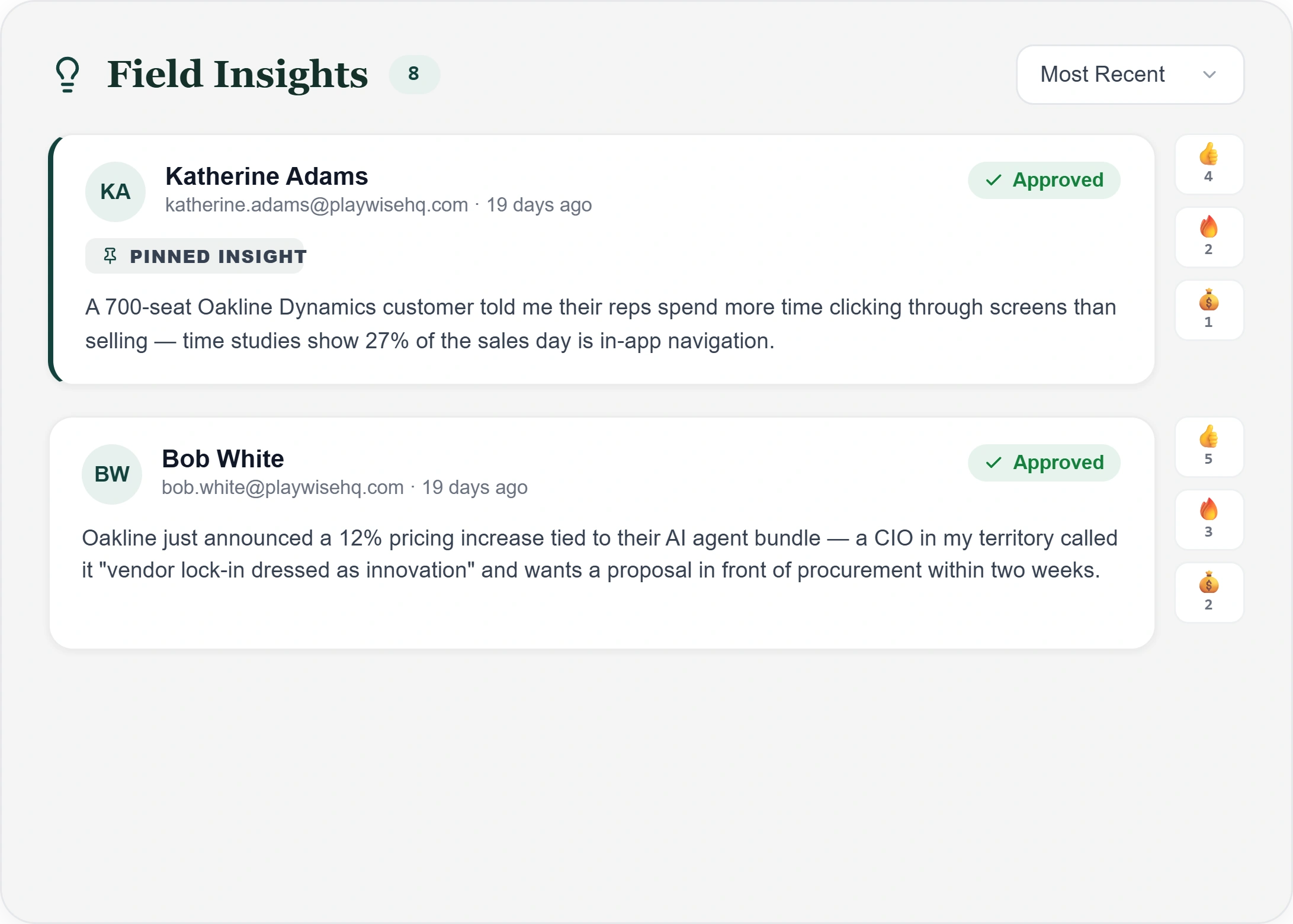
Reps submit competitive insights from active deals. Editors can review, approve, reject, or incorporate those insights into the official battlecard guidance used by the rest of the team.

Playwise HQ Field Insights Condensed

Key Takeaway:

Notion gives teams the components to build a feedback loop. Playwise HQ provides the competitive sales feedback loop as part of the product.
Explore Sales-Sourced Insights >

Overcoming Objections

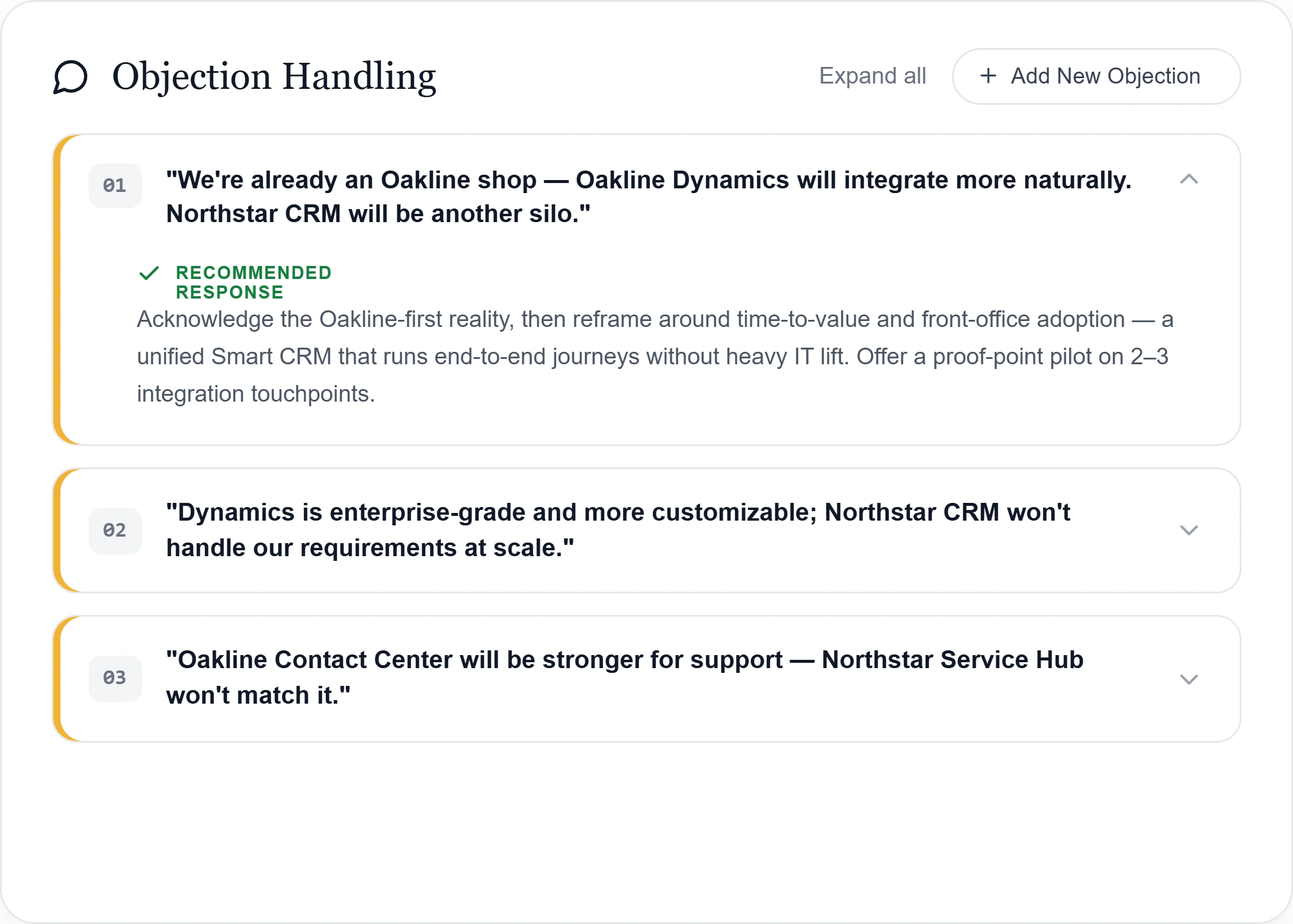
Playwise HQ vs Notion for competitor objection handling

A Notion battlecard can include an objection-handling section. Teams can document common buyer concerns, recommended responses, talk tracks, evidence, and links to supporting assets.

The challenge is keeping those responses consistent, easy to locate, connected to the correct competitor, and updated as new objections emerge.

Playwise HQ makes objection handling a dedicated workflow. Guidance can be organized around competitors, products, buyer personas, and real field feedback rather than being another manually maintained section on a page.

Playwise HQ objection handling condensed screenshot

Key Takeaway:

Notion can document objection responses. Playwise HQ is designed to manage and improve them as part of competitive selling.
Explore objection handling >

Competitive Deal Learning

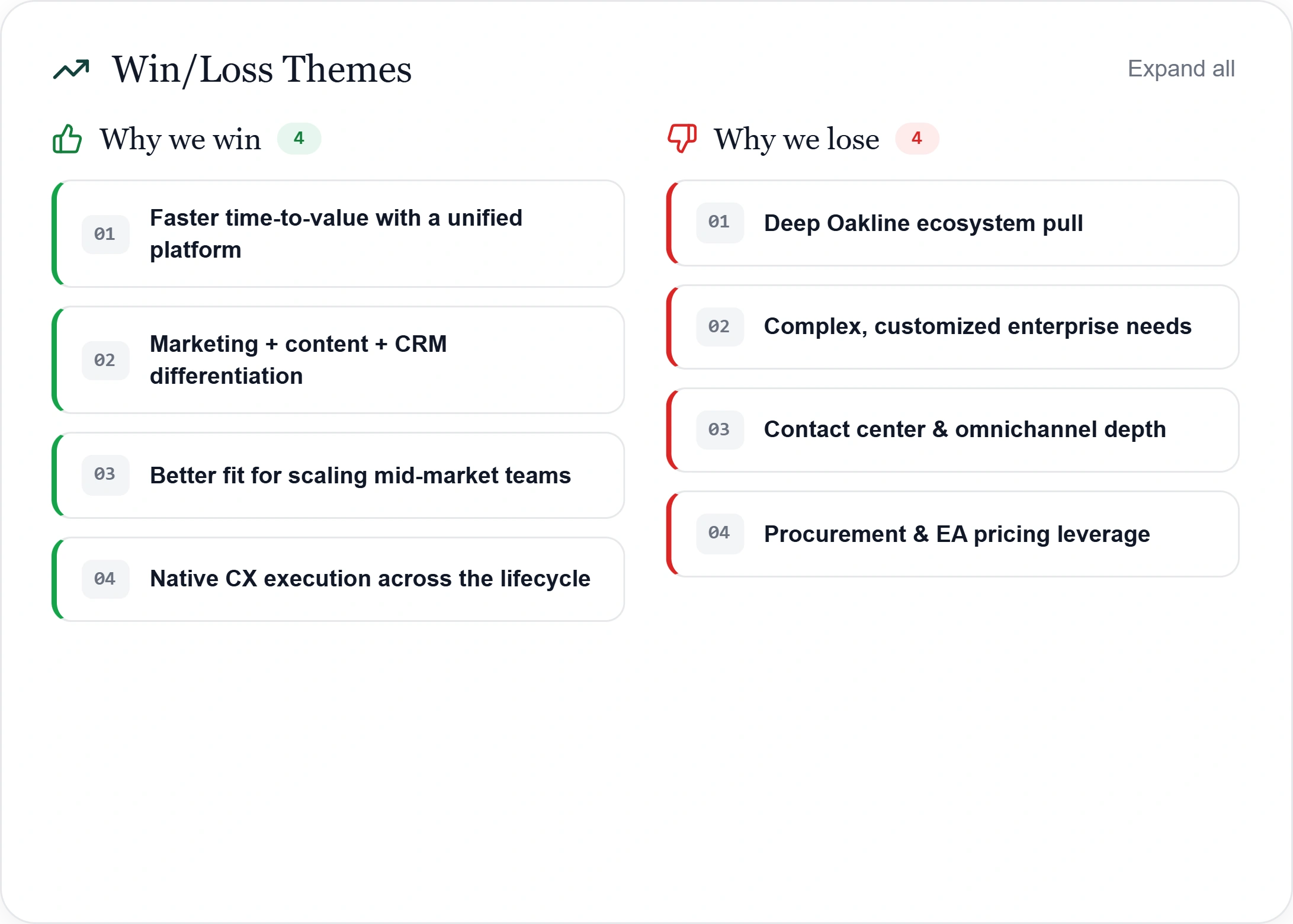
Playwise HQ vs Notion for CRM outcomes and win-loss learning

Notion can store opportunity links, deal notes, win reasons, loss reasons, and competitive observations. With enough database design and integration work, a team can create a basic win-loss system.

But that workflow must be built, maintained, and connected to the competitor pages manually or through custom integrations.

Playwise HQ connects competitive guidance with real deal outcomes. Teams can identify which competitors appear in opportunities, capture why deals were won or lost, organize recurring themes by competitor, and use those findings to improve future battlecards and coaching.

Playwise HQ Win-Loss Analysis Condensed

Key Takeaway:

Notion can record competitive outcomes. Playwise HQ turns them into a feedback loop that improves the guidance reps use next time.

Explore win-loss analysis >

Pricing Comparison

Notion costs less as software. Playwise reduces the cost of running the process.

Notion’s free plan gives teams a flexible workspace where they can design and maintain their own battlecard pages. Playwise HQ’s Free plan supports up to five users and five competitor battlecards within a workflow built specifically for competitive sales. The better comparison is therefore not simply software price. It is total cost of ownership. A DIY battlecard system in Notion requires internal time to design the structure, research competitors, maintain pages, configure workflows, review submissions, connect deal data, and drive sales adoption. Playwise HQ provides the battlecard structure, objection handling, field-intel workflow, and competitive deal learning from the start, reducing how much of the underlying system your team needs to build and operate itself.

Notion — Flexible Workspace Pricing

Free and paid per-seat plans

Review Notion’s current pricing, AI allowances, Custom Agent credits, and plan features before purchasing.

You have a small team, a short competitor list, and a manageable number of pages.

Playwise HQ — Purpose-Built Pricing

View pricing >

Free

$0

to get started

Build your first competitor battlecards without a long implementation project.

Pro

$250

from per month

For growing sales teams that want the full battlecard, objection, and intel workflow.

Enterprise

$450

from per month

For larger teams that need more users, onboarding, and support.

Pricing and packaging can change. Review each vendor’s current pricing, contract terms, onboarding requirements, and implementation scope before making a purchase decision.


HOW TO DECIDE

When Notion is enough, and when to graduate

This is a maturity-curve decision, not a winner-take-all one. Most teams should start cheap and upgrade when the DIY system starts costing them deals. Here is how to tell where you are.

Choose Playwise HQ when competitive selling becomes an ongoing process

Playwise HQ becomes the stronger fit when reps, competitors, deal data, objections, and field insights can no longer be managed reliably through ordinary pages.

1

Your battlecards are becoming stale

Structured ownership, review, and field-intel workflows make it easier to maintain trusted guidance.

2

Reps are not opening the pages

Move from a general knowledge base to a product built around sales-facing competitor guidance.

3

Valuable intel is trapped in calls and rep knowledge

Give reps a structured way to submit what they learn during active opportunities.

4

You need dedicated objection handling

Organize competitor-specific and persona-based responses as a first-class workflow.

5

You want CRM-connected competitive outcomes

Connect competitors with real opportunities and learn why deals are won or lost.

6

You want the workflow without building it yourself

Use a purpose-built data model, governance process, and sales experience rather than assembling them from generic components.

Choose Notion if you need a flexible starting point

Notion may be enough when the team is small, the competitive landscape is manageable, and someone can own the process.

1

You track only a few competitors

A simple database and one page per competitor may be sufficient when the library remains small.

2

Your company already lives in Notion

Using an existing workspace reduces procurement, training, and change-management friction.

3

You have a clear battlecard owner

Someone can research competitors, update pages, manage templates, and review stale content regularly.

4

You want complete flexibility

Your team wants full control over layouts, database properties, relations, automations, and information architecture.

5

You do not yet need CRM or win-loss workflows

The immediate job is documenting competitor knowledge rather than connecting it to sales outcomes.


HOW TO DECIDE

When Notion is enough, and when to graduate

Use these questions to determine whether your team still needs a flexible DIY workspace or has reached the point where a dedicated battlecard platform makes sense.

1

How many competitors and sales reps are involved?

Choose Notion

You have a small team, a short competitor list, and a manageable number of pages.

Choose Playwise HQ

You have more reps, more competitors, multiple products, or different competitive guidance across teams and segments.

2

Who will maintain the system?

Choose Notion

A clearly assigned owner has the time to research, update, review, organize, and govern the battlecard workspace.

Choose Playwise HQ

You need structured workflows that reduce the amount of manual coordination and system design required from one owner.

3

Where do reps need the information?

Choose Notion

Reps are comfortable navigating Notion and consistently use it as their primary internal knowledge source.

Choose Playwise HQ

Reps need a focused, sales-specific experience for finding competitive guidance during calls, demos, deal reviews, and negotiations.

4

Do you need a competitive feedback loop?

Choose Notion

You are comfortable manually gathering field notes, maintaining forms, reviewing submissions, and updating pages.

Choose Playwise HQ

You need sales-sourced intel, objections, CRM outcomes, and win-loss themes feeding directly into competitor guidance.

5

How many competitors and sales reps are involved?

Choose Notion

Your team values maximum flexibility and is willing to design its own databases, templates, permissions, automations, and integrations.

Choose Playwise HQ

Your team wants to start with a battlecard operating model designed specifically for competitive selling.

FINAL RECOMMENDATION

Choose Notion if you need a flexible, low-cost place to create your first competitor battlecards and have the ownership required to maintain them. Choose Playwise HQ when your battlecards need to become a dependable sales workflow covering objection handling, field intel, CRM-connected outcomes, and win-loss learning. Notion and Playwise HQ can also work together. Notion can remain the company’s general knowledge platform, while Playwise HQ becomes the dedicated system for competitor battlecards and competitive sales execution.


FAQs

Playwise HQ vs Notion battlecards: common questions

The most common questions teams ask when deciding whether to build battlecards in Notion or adopt a dedicated platform.

What is the best Notion alternative for competitor battlecards?

Playwise HQ is the best Notion alternative for teams that need purpose-built competitor battlecards, objection handling, sales-sourced intel, CRM-connected competitive outcomes, and win-loss learning. Notion remains a good choice for teams that want a flexible and low-cost DIY starting point.

Yes. Notion can be used to create a competitor database, page templates, strengths and weaknesses, pricing notes, objections, proof points, links, review dates, and related assets. The team must design, maintain, govern, and drive adoption of the system itself.

Notion is a general-purpose connected workspace for docs, wikis, databases, projects, AI, and customizable workflows. Playwise HQ is purpose-built for competitive sales execution. Its core workflows include competitor battlecards, objection handling, sales-sourced intel, competitive deal outcomes, and win-loss learning.

Yes. Notion AI can help draft content, summarize documents, search workspace knowledge, autofill database properties, analyze meeting notes, conduct research, and run custom agents. The difference is that Notion AI is general-purpose. Playwise HQ applies AI directly to the structure and workflows required for competitor battlecards and sales guidance.

Notion may be enough if you have a small sales team, track only a few competitors, already use Notion extensively, and have someone responsible for reviewing and maintaining the content. It is also a sensible way to test whether battlecards are valuable before adopting a dedicated platform.

Common signs include stale pages, duplicated information, reps struggling to find the correct card, inconsistent objection responses, valuable intel being lost in calls or Slack, and no clear connection between competitive guidance and deal outcomes.

Yes. Existing Notion battlecards can provide the starting content for your Playwise HQ competitor records. A practical migration begins with your highest-priority competitors, brings across the most useful positioning and objection guidance, then improves the cards with structured field intel and competitive deal learning.

Notion is generally cheaper when comparing only software license cost, particularly if your company already uses it. The broader calculation should include the internal time required to design the system, update cards, manage submissions, configure integrations, govern content, and drive adoption. Playwise HQ charges for a purpose-built workflow that reduces the need to build and maintain those processes internally.

Yes. Notion can remain the company’s general documentation, project, and knowledge platform. Playwise HQ can become the dedicated system for competitor battlecards, objections, field intel, and competitive deal learning. Relevant Playwise HQ content can also be linked from Notion when required.

Yes. Playwise HQ supports CRM workflows across HubSpot, Salesforce, Pipedrive, Zoho CRM, and monday.com CRM, helping teams connect competitors and competitive outcomes with real opportunities.

Yes. Playwise HQ offers a Free plan for up to five users and five battlecards, allowing teams to test the purpose-built workflow before upgrading.

Start with the three to five competitors that appear most often in active deals. Move their strongest content into Playwise HQ, add structured objection guidance, connect relevant CRM workflows, and invite reps to begin submitting field insights.


Outgrown DIY battlecards?

Graduate from Notion pages to battlecards built for sales

Keep Notion for your company wiki. Use Playwise HQ when competitor battlecards need stronger adoption, dedicated objection handling, sales-sourced intel, and learning from real competitive outcomes.

100% Free tier available - Get Started in Minutes - No Credit Card Required

Sources Reviewed - 21 July 2026

This comparison was based on publicly available information and research reviewed on 21 July 2026. Notion and Playwise HQ may update their products, pricing, AI features, integrations, and packaging. Review each vendor’s current documentation before making a purchasing decision.

Book Your Playwise HQ Demo

Get a personalised walkthrough of Playwise HQ and see how modern sales teams use competitive intel to close more deals.

Choose a time that works for you and get a live walkthrough tailored to your sales team.

  • 25–30 minutes
  • Personalised to your competitors
  • No hard sell — just real workflows

Prefer to start over email? Tell us a bit about your team and we’ll follow up with next steps.

  • Quick response (usually same day)
  • We’ll share examples and suggest the best next step
  • No hard sell, no pressure

By booking a demo or requesting an email, you agree to be contacted about Playwise HQ. Unsubscribe anytime.

Send an email instead